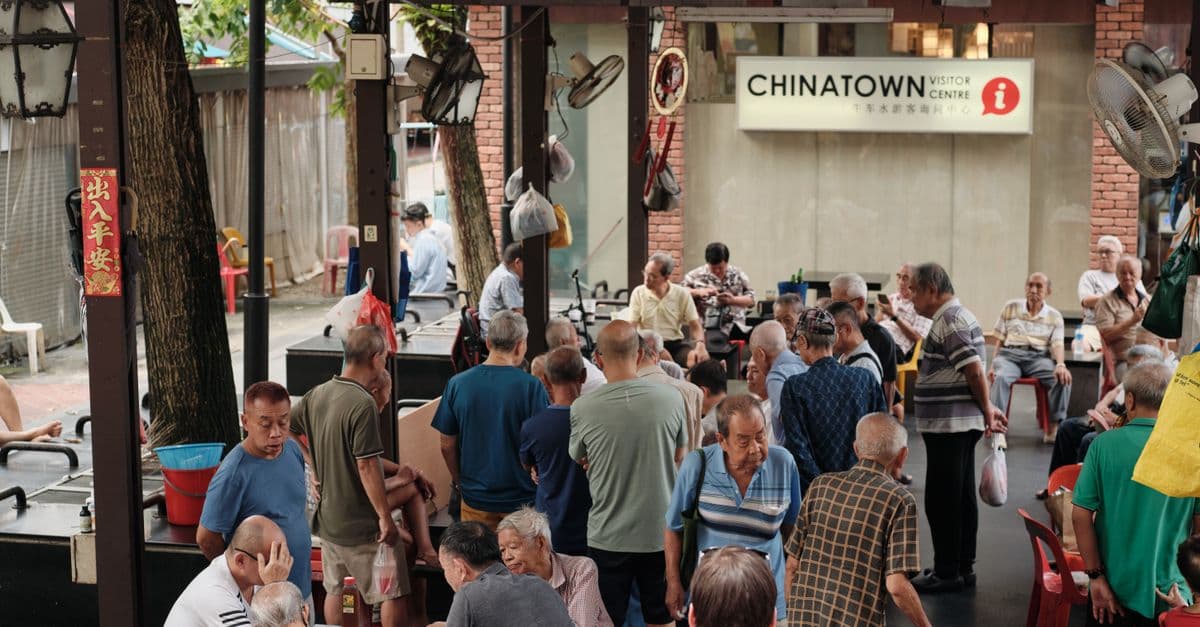
Neighbourhood houses and community centres are friendly local hubs offering classes, support and connection. Here's what they do and how to find one.
Every town and most suburbs have one, and yet plenty of people walk past it for years without knowing what goes on inside. It might be an old weatherboard house with a hand-painted sign, a room behind the library, or a purpose-built centre next to the footy oval. Whatever it looks like, the neighbourhood house or community centre is one of the most useful and least appreciated places in Australian community life.
If you're older, caring for someone, new to an area, or just feeling a bit cut off, your local one is worth getting to know. Here's what they actually do.
What is a neighbourhood house?
A neighbourhood house (also called a community house, community centre, or learning centre depending on where you live) is a welcoming local hub run for and often by the people who use it. They grew out of a simple, generous idea: a place in every community where anyone can drop in, learn something, get a hand, or just have a chat.
They're not government offices and they're not charities in the formal sense, though many work closely with both. They're community-led, which means each one shapes itself around the actual needs of its patch. A house in a farming town looks different from one in an inner-city suburb, because the people and their needs are different.
The national peak body, the Australian Neighbourhood Houses and Centres Association (ANHCA), harnesses the collective strength of over 1,000 neighbourhood houses and community centres through six state-level sector peaks. ANHCA reports that more than 400,000 Australians visit a neighbourhood or community house or centre each week. That's a quietly enormous network.
What goes on inside?
Here's where it gets genuinely surprising. Under one modest roof, a neighbourhood house might run:
- Social groups - shared lunches, coffee mornings, craft circles, men's and women's groups.
- Exercise and wellbeing - gentle exercise, yoga, tai chi, walking groups.
- Learning - art and craft classes, cooking, language groups, and adult education. In Victoria many are "Learn Local" providers offering pre-accredited courses.
- Tech help - sessions to get you comfortable with a phone, tablet, or computer, and to stay safe online.
- Practical support - help accessing services like Centrelink, food relief in some areas, justice-of-the-peace services, tax help in season.
- Hireable space - rooms for your own group, club, or family event.
- Programs for specific groups - new parents, migrants and refugees, young people, and yes, older adults.
No two houses run the same menu. The right question isn't "what do neighbourhood houses offer," it's "what does my one offer," and the only way to know is to pop in or ring up.
Why they're brilliant for older adults
A neighbourhood house ticks a lot of boxes at once for people in later life.
It's local and low-cost. Most are within easy reach and many activities are free or run on small fees. That matters when you're on a pension or no longer driving long distances.
It's unintimidating. This is the big one. A neighbourhood house feels like a friend's place, not an institution. There's no front desk making you feel small, no jargon, no sense you have to prove you belong. For someone nervous about "joining" anything, it's the gentlest possible front door.
It's a one-stop connection point. Lonely and want company? There's a group for that. Need to learn the new bus app? They'll show you. Want to give back? They always need volunteers. One place, many doors.
Staff and volunteers actually know the area. If your house can't help with something, they almost always know who can, whether that's aged care services, a local Men's Shed, or council community transport. They're a brilliant referral point.
A small story of how it works
Picture a woman, recently widowed, whose daughter lives in Perth. She's not depressed exactly, just adrift. The house is two streets away, so she goes in to ask about a computer class so she can video-call the grandkids.
She does the class. While she's there she sees a flyer for a Wednesday lunch group and, because she's already through the door and the staff are friendly, she gives it a go. Six months on she's a regular at the lunch, she's joined the craft circle, and she's started volunteering on the welcome desk herself. None of it was planned. It started with one small, practical question and a place that made saying yes easy.
That's neighbourhood houses in a nutshell. They lower the barrier so far that one little step turns into a whole new routine.
How to find one near you
Different states use different names, so don't be thrown if yours is called a community house, a community centre, or a learning centre. They're cut from the same cloth.
Frequently asked questions
Do I have to be disadvantaged or in need to go?
No. Neighbourhood houses are for everyone in the community. Plenty of people use them purely for the classes, the company, or to run their own group. You don't have to qualify for anything.
Are they free?
Many activities are free, and others run on small, affordable fees to cover materials. Cost is rarely a barrier, and staff will happily talk it through if money's tight.
What if I just want company, not a class?
That's completely valid, and you won't be the only one. Most houses run purely social groups, shared meals, and drop-in spaces precisely for that. Walking in for a cuppa is a perfectly good reason to come.
Can my club or group use the space?
Usually, yes. Most houses have rooms you can hire or use for community groups, often at very reasonable rates. Ask at the front desk.
How is this different from a senior centre or U3A?
There's overlap, and that's fine. Senior centres focus specifically on older adults, and U3A focuses on member-led learning. A neighbourhood house is broader: all ages, all sorts of activities and support under one roof. Many people use more than one.
If you take one thing from this: your local neighbourhood house is probably more useful, and friendlier, than you imagine. Find the one near you, wander in, and ask what's on this week. That's all it takes to start.