Choosing a retirement village: contracts, fees, and what to check
Our Mate editorial team.Last reviewed June 2026.

A retirement village can be a genuinely good move: a smaller, easier home, neighbours at a similar stage of life, less maintenance, and often a real lift in social connection. It can also be a financially significant decision wrapped in a contract that does not behave like an ordinary property purchase. The single biggest source of regret is not the lifestyle; it is people signing a contract they did not fully understand, particularly the cost of leaving.
This guide explains how retirement villages work, the main contract types, the deferred management fee (the exit fee) in plain English, what to check before you sign, the cooling-off period, and why independent advice is not optional here.
One framing to hold onto from the start: a retirement village is not the same as residential aged care. A village is independent living with lifestyle and community services. It is not a residential aged care facility, and moving into a village does not provide nursing-home-level care. If care needs grow, you may still need home care or, later, residential care, which is a separate system covered in our guide to how to get a parent into aged care.
How a retirement village works
In most villages, residents are over 55 and live independently in their own self-contained unit, with shared facilities and optional services on tap: communal areas, social activities, sometimes a cafe, gym, or pool, and varying levels of support. You typically pay an amount to move in, ongoing fees while you live there, and a further amount when you leave. That third payment is what catches people out.
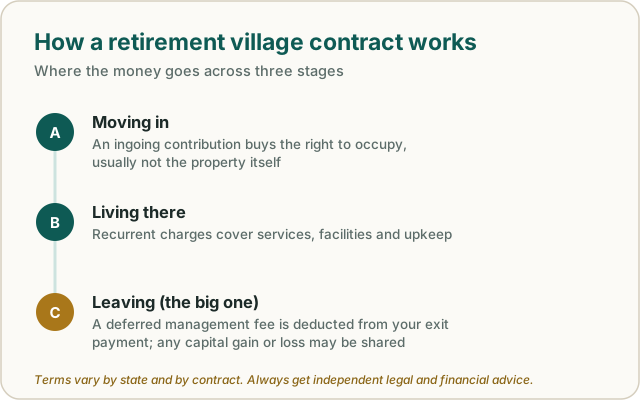
The crucial point is that, in most villages, you are not simply buying a property. What you are buying is usually a right to occupy, governed by a contract and state-based retirement village legislation, not a standard freehold title. That changes how the money works at every stage.
The main contract types
Villages use different legal structures, and the structure determines what you own, what you pay, and what comes back to you. The three you will encounter most are:
| Contract type | What you hold | In plain terms |
|---|---|---|
| Loan / licence | A licence to occupy, backed by a loan to the operator | You pay an "ingoing contribution", mostly an interest-free loan; you have the right to live there, not ownership |
| Leasehold | A long-term lease (often 99 years or for life) | You hold a registered lease over the unit rather than owning it outright |
| Strata title | Actual ownership of the unit | You get a title deed and own the unit, usually still inside the village scheme and its rules |
A few things to understand about each:
- Loan / licence is the most common model. Your large up-front payment is largely a loan to the operator, interest-free, that is repaid (minus the exit fee and other deductions) when you leave. You do not own real estate; you own a contractual right.
- Leasehold gives you a registered interest, which can offer more security than a bare licence, but it is still not ownership, and the same exit-fee mechanics usually apply.
- Strata title is the closest to a normal property purchase: you own the unit and can usually sell it like real estate. Even so, you are inside the village scheme, so ongoing fees and sometimes a deferred management fee can still apply, and the body corporate rules bind you.
Two villages that look identical on a tour can have completely different contracts underneath. The brochure does not tell you which model applies; the contract does.
The deferred management fee, explained plainly
The deferred management fee (DMF), also called an exit fee or departure fee, is the part everyone needs to understand before signing anything.
A DMF is a fee the operator charges when you leave, deferred until exit rather than paid up front. It is usually calculated as a percentage for each year you live there, building up to a capped maximum after a set number of years. For example, a contract might charge a percentage per year for the first several years, then stop accruing once it hits a cap.
Two design choices change the number a lot:
- Is it a percentage of what you paid coming in, or of the price the unit sells for when you leave? If it is based on the (usually higher) exit price, the fee in dollars is larger.
- Who gets any capital gain, and who wears any capital loss? In many village contracts the operator keeps some or all of the capital gain, and the resident may bear refurbishment and selling costs. This is very different from owning a home, where the gain is yours.
The effect is that the amount refunded to you (or your estate) when you leave can be substantially less than you paid to get in. That is not a scandal in itself; it is how the model is designed, and the lower exit return is the trade for lower entry costs and ongoing services. But it must be understood and quantified before you commit, because it directly reduces what is left for your next move, often into care, or for your estate.
Ask the operator to put in writing a worked example: "If I pay X to move in, and leave after Y years, exactly how much do I get back, and how much do you keep?" A reputable village will provide this. If they are evasive, treat that as a warning.
Ongoing and other costs
Beyond the entry payment and the eventual exit fee, expect recurrent charges while you live there:
- General services / maintenance fees: ongoing weekly or monthly charges for the upkeep of communal areas, management, and services. These can rise over time.
- Personal service charges: optional extras like meals, cleaning, or care services, charged on top.
- Refurbishment and reinstatement costs: many contracts make the departing resident responsible for returning the unit to a saleable standard.
- Reselling costs: marketing and agent fees when the unit is sold on, sometimes borne by the outgoing resident.
When comparing villages, compare the total cost of living there over a realistic time horizon, not just the headline entry price. A low entry cost paired with a high DMF and high ongoing fees can be the more expensive option overall.
The cooling-off period
Retirement village contracts come with a cooling-off period: a window after signing during which you can cancel without penalty (or with only limited, specified deductions). The exact length and rules are set by each state's and territory's retirement village laws and differ across the country, so check the rule that applies where the village is. Do not rely on a remembered number; confirm it in writing for your state.
The cooling-off period is a safety net, not a substitute for getting advice before you sign. Use the period if you have genuine second thoughts, but the better protection is understanding the contract fully in the first place.
What to check before you sign
A practical checklist:
- The contract type: loan/licence, leasehold, or strata. Know exactly what you are buying.
- The DMF: the percentage, the period it accrues over, the cap, and whether it is based on entry or exit price.
- Capital gains and losses: who keeps any uplift, and who wears any fall.
- The exit number in dollars: a written worked example of what you get back after a realistic stay.
- Ongoing fees: current amounts, how they can rise, and what happens to them after you move out but before the unit resells.
- Reselling and refurbishment: who pays, and how long a resale can take (you may keep paying fees on an empty unit until it sells).
- What services are actually included versus charged as extras.
- Care: what happens if your needs increase; the village is not aged care, so know the plan.
- The disclosure documents: villages are required to provide standard disclosure statements; read them.
Get independent legal and financial advice before signing
This is the most important sentence in the guide. Before signing a retirement village contract, get independent legal advice from a solicitor experienced in retirement village contracts, and independent financial advice on how the decision affects your pension, your funds for future care, and your estate.
"Independent" matters: not the village's recommended lawyer, not the salesperson's reassurance. A specialist solicitor will read the actual contract and tell you what the exit numbers really are; a financial adviser will tell you whether the move leaves you with enough for the care you may need later. The cost of that advice is trivial next to the size of the decision. Because retirement village payments interact with the Age Pension and with future aged care fees, this is not a decision to make on a brochure and a good feeling about the place.
To start comparing options, browse retirement villages in our directory.
Frequently asked questions
Do I own my unit in a retirement village?
Usually not in the way you own a house. Most villages use a loan/licence or leasehold model, where you hold a right to occupy rather than a title. Only strata-title villages give you actual ownership of the unit. The contract type determines what you own and how the money comes back to you when you leave, so confirm it before signing.
What is a deferred management fee?
It is an exit fee, deferred until you leave, charged by the operator. It usually builds up as a percentage for each year you live there, up to a capped maximum, and may be based on either your entry price or the unit's exit price. It can significantly reduce the amount refunded when you leave, so get a written worked example before committing.
Is a retirement village the same as aged care?
No. A retirement village is independent living with lifestyle and community services for people who can largely look after themselves. It is not residential aged care and does not provide nursing-home-level care. If care needs grow, you arrange home care or residential aged care separately, through the aged care system.
How long is the cooling-off period?
There is a cooling-off period after signing, but its length and rules are set by each state and territory and differ across Australia. Confirm the period that applies where the village is located, in writing, rather than relying on a general figure. It is a safety net, not a replacement for getting advice before you sign.
Will moving into a village affect my pension?
It can. How a retirement village payment is treated for the Age Pension depends on the amount you pay and the contract structure, and it can affect both the assets and rent-assistance position. This is one of the reasons independent financial advice is essential before signing. Services Australia can also explain how your specific arrangement would be assessed.
What happens to the money when I leave?
You typically get back your ingoing contribution or loan, minus the deferred management fee and any agreed deductions such as refurbishment and reselling costs, and minus any capital loss the contract puts on you. Depending on the contract, you may also wait until the unit resells to be repaid, while still paying some fees in the meantime. Get the exact terms in writing before you sign.
Related guides
Aged care fees explained: what you actually pay
Plain-English guide to aged care costs in Australia: home care contributions, the basic daily fee, means-tested fees, and accommodation deposits (RAD and DAP).
How to get a parent into aged care in Australia
A step-by-step guide to the aged care entry process: from the first call to My Aged Care through choosing a facility and understanding the costs.
Home care package vs CHSP: what is the difference?
Plain-language guide to home support in Australia: how the new Support at Home program replaces home care packages, where CHSP still fits, how to access each, and what to do while you wait.